



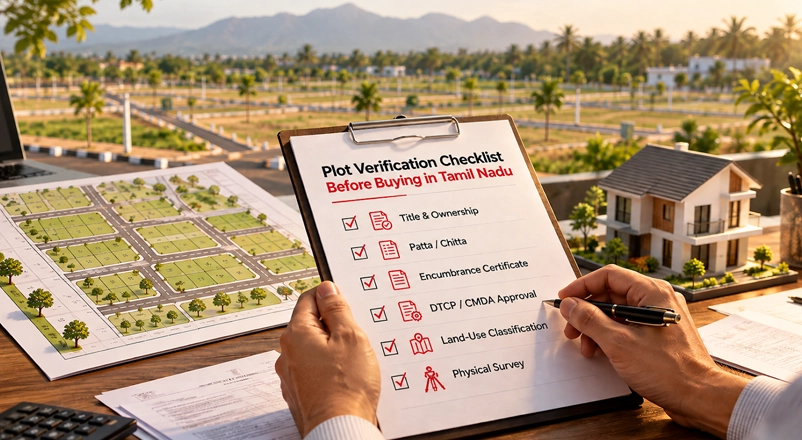
How to Legally Verify a Plot Before Buying in Tamil Nadu
Buying a plot in Tamil Nadu is one of the biggest financial decisions a family makes. A few hours of document verification can save years of legal trouble. Before paying any advance, check the plot’s title, land records, encumbrance certificate, layout approval, and land-use status. Use the relevant government portals to verify each record. Then ask an independent property lawyer to review the documents. Follow these steps in order to confirm that the plot is legally ready to build on.
Verify the Seller's Ownership and Property Title
Documents You Should Collect from the Seller
-
The current sale deed
-
parent documents that show earlier ownership
-
Any partition, settlement, or gift deed linked to the property
-
A legal-heir certificate, if the land came through inheritance
-
Court decree or probate papers, where they apply
How to Match Ownership Details Across Documents
Check that the seller's name, survey number, subdivision number, extent, and boundaries match across every document. A patta in the seller's name is a useful starting point, but it is not proof of ownership. Ownership rests on the registered deeds and the chains that links them.
How to Check Land Records on the Tamil Nadu e-Services Portal
Use the Tamil Nadu Land Records e-Services portal to check the survey number, subdivision, extent and owner name.
-
Village land -
Patta, Chitta, A-Register extract, and Field Measurement Book (FMB) sketch.
-
Land inside city limits -
Town Survey Land Register (TSLR) extract, with ward and block details.
Note how the records classify the land:
| Entry in the Records | What It Means | Status for a Residential Plot |
|---|---|---|
| Nanjai | Wetland | High risk: ask for proof of land-use conversion. |
| Punjai | Dryland | Generally fine, but confirm the land use and approvals. |
| Residential | Land classified for housing use | Suitable, but check it matches the approved layout |
| Government land | Land shown as owned by the government | High risk: usually can't be sold by a private seller |
| Poramboke | Government-classified land (waterbodies, roads, common-use land) | High risk: seller may not have a valid title |
| Other category | Any classification not listed above | Ask your lawyer if it needs reclassification |
How to Compare the FMB Sketch with the Actual Plot
Walk the plot with the FMB sketch in hand. Check the shape, size, or boundaries against the stretch, and raise any difference with the seller. A licensed surveyor will verify the details and confirm the match.
Obtain and Verify the Encumbrance Certificate (EC)
How to Apply for an EC on TNREGINET
Apply for an EC through TNREGINET, the registration Department's portal, or visit the local Sub-Registrar Office. The EC shows registered transactions linked to the property, including
-
Past sales
-
Mortgages and bank charges
-
Court attachments
-
Leases, and other registered interests
Request a 30-year search, which lenders often ask for when checking the property’s records.
What a Clean EC Tells You & What It Misses
An EC confirms only registered transactions linked to the property. It does not reveal family disputes, private agreements, or other unregistered claims. Review the title documents and check for these separately.
Confirm DTCP or CMDA Layout Approval Before You Buy
How to Verify Actual Approval Documents
Ask the seller to show the original approval papers instead of relying on a listing that says “DTCP approved.” The approving authority depends on the location. It may be DTCP or CMDA.
Check for:-
The DTCP or CMDA approval letter
-
Final layout approval from the local body
-
Your exact plot number on the approved layout drawing
How to Check Roads, Parks, and Open-Space Handover
Compare the road width and alignment with the approved layout. Verify that the developer has handed over the marked parks and open spaces to the local authority through a registered gift deed. Ensure your plot matches the approved layout.
Check Land-Use Classification, Waterbody, and Acquisition Status
How to Confirm Residential Land-Use Classification
-
Review the master plan to confirm that the plot falls in a residential zone.
-
Compare the current land-use classification with the use you plan for the plot.
-
Confirm whether reclassification is needed before you start construction.
-
Note the land-use rules that apply to the property before you proceed.
How to Identify Waterbody, Poramboke, and Acquisition Risk
Check for water bodies
Confirm that the plot does not fall within an eri (tank), kulam (pond), channel, or odai (watercourse).
Check the land classification
Review the records to confirm that the land is not marked as poramboke (government land).
Check for future projects
Look for proposed roads, highways, or land acquisition notices that could affect the plot.
Run a Litigation Search and Physical Survey of the Plot
How to Check for Pending Legal Disputes
Ask your lawyer to check whether the property has any pending legal issues, including:
-
Court or revenue disputes
-
Family or inheritance claims
-
Claims from co-owners or legal heirs
-
Government claims or acquisition notices
Why You Need an Independent Physical Survey
Hire an independent licensed surveyor to check the plot’s boundaries, measurements, access, encroachments, and drainage. Compare the survey results with the FMB sketch and approved layout. Resolve any mismatch before making the purchase.
How to Check TNRERA Registration for Developer-Led Plots
-
Search the project on TNRERA before buying a plot from a developer.
-
Verify the registration number and promoter details listed for the project.
-
Review the approved layout and compare it with the seller’s documents.
-
Confirm your plot number appears in the registered project details.
How to Assess Whether You Can Legally Build on the Plot
-
Check the zoning rules to confirm your planned construction is allowed.
-
Review the building lines and setbacks that apply to the plot.
-
Check the permitted floor area before planning your building.
-
Confirm the drainage requirements and other site rules before you buy.
Draft a Sale Agreement Before You Register the Plot
What to Include in Your Plot Sale Agreement
Once you complete the property checks, sign a written agreement before paying a larger advance. Include these details:
-
Property details: Add the survey numbers, plot number, boundaries, and other key details.
-
Sale amount: State the total sale price and the advance you will pay.
-
Registration date: Set the expected date for completing the sale registration.
-
Pending dues: Clearly state who will clear any unpaid taxes, charges, or other dues.
Add a condition that the sale will proceed only after satisfactory title and approval checks. State when and how you will get the advance back if a serious issue comes up.
Legal Verification Checklist Before Buying Land in Tamil Nadu
-
Verify seller's title and ownership chain
-
Check land records on TN e-Services portal
-
Obtain 30-year Encumbrance Certificate (EC)
-
Confirm DTCP or CMDA layout approval
-
Check land-use classification and waterbody status
-
Run litigation search with a property lawyer
-
Conduct independent physical survey
-
Verify TNRERA registration for developer plots
-
Clear all pending dues before registration
-
Sign sale agreement with all conditions before paying advance
Buy a Legally Verified Residential Plot in Coimbatore
Use these checks for both resale plots and plots in developer-led layouts. Review the title, land records, EC, layout approval, and land-use classification before you finalise the purchase. You can review them with your lawyer to avoid missing important details.
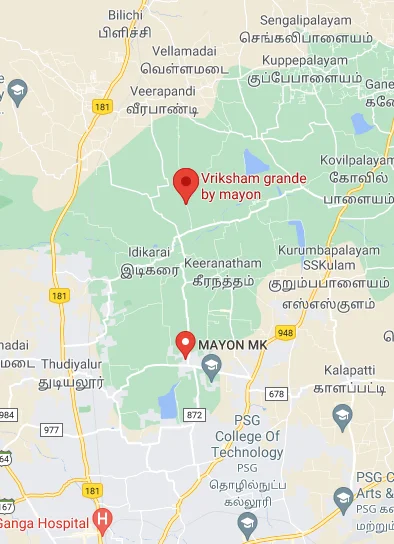
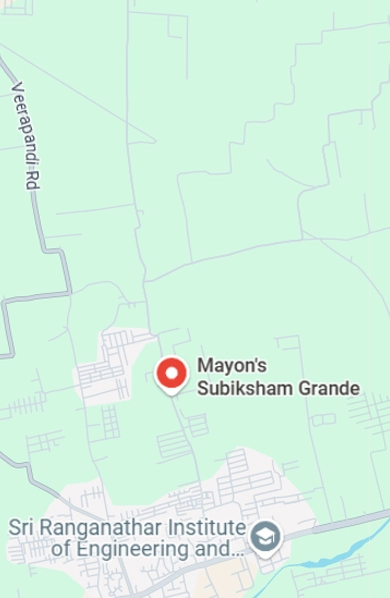
If you are considering a residential plot in Coimbatore, Mayon Foundations offers DTCP-approved residential plots with approved layouts and property documents for review. You should still verify the relevant records and approvals independently before making a purchase.








Comments
Write a Review